
What is a Silicon-Carbon Battery? Advantages and Disadvantages
 By Maii_HDSenior Review Editorabout 1 year ago
Quick Answer
What is a silicon-carbon battery? It’s a next-generation battery technology offering higher capacity, better performance at low voltages, and enabling thinner,
Advertisement
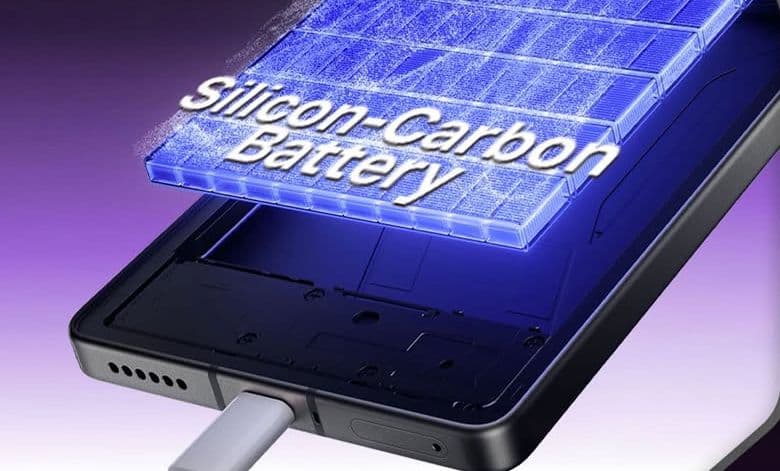
What is a silicon-carbon battery? A silicon-carbon battery is a type of lithium-ion battery that utilizes a silicon-carbon anode in place of the traditional graphite anode. This emerging technology is gaining attention for its ability to increase energy density and slim down device designs.
Smartphones powered by silicon-carbon batteries can be thinner, lighter, and still offer larger battery capacities compared to those using normal lithium-ion batteries.
To illustrate, a smartphone using a lithium-ion battery might be thick and heavy with a 5,100 mAh capacity. Meanwhile, a phone equipped with a silicon-carbon battery could be slimmer, lighter, and feature a 6,500 mAh battery. This performance gain is possible because silicon can hold a significantly higher number of lithium ions compared to carbon.
Silicon boasts a theoretical charge capacity of 4,200 mAh/g, which is more than 10 times that of graphite’s 372 mAh/g. For companies aiming to keep up with the trend of ultra-slim devices, adopting silicon-carbon battery technology is currently one of the best paths forward. It enables manufacturers to create sleek designs without sacrificing battery life.
Advantages of Silicon-Carbon Batteries
One major advantage of silicon-carbon batteries is their significantly higher capacity in the same size. Thanks to a 12.8% increase in energy density, devices can store more power in smaller physical dimensions. This means slimmer phones, longer usage times, and enhanced user experience without increasing the device size.
Another compelling benefit is that silicon-carbon batteries maintain 240% more remaining capacity at low voltages (like 3.5V), which helps prevent sudden shutdowns and improves battery reliability. Moreover, they show comparable low-temperature performance to graphite and exhibit extended battery life at lower voltages—something that’s highly valuable for real-world usage and cold-weather conditions.
Disadvantages of Silicon-Carbon Batteries
Despite their advantages, silicon-carbon batteries face some challenges. Being a relatively new technology, the long-term effects of charge/discharge cycles, specifically the formation and aging mechanisms, are still not completely understood. This means there’s more research needed before mass adoption, particularly in high-risk or critical-use environments.
Additionally, the manufacturing of silicon-carbon batteries involves proprietary fabrication techniques, which increases production costs. This makes them more expensive to produce than traditional lithium-ion batteries, which could slow down adoption among mainstream manufacturers for now.
Would Silicon-Carbon Batteries Become the New Standard?
Many tech companies are slowly but steadily embracing silicon-carbon battery technology, especially with the growing demand for sleek and portable devices. Smartphones, electric vehicles, laptops, and even fitness trackers are expected to benefit. As consumers continue to crave lighter, thinner products without compromising on battery life, silicon-carbon batteries emerge as a natural alternative to lithium-ion.
Currently, adoption remains limited, mostly among Chinese smartphone manufacturers like Honor, Tecno, Infinix, etc. But larger companies like Apple, Google, and Samsung are taking a cautious approach due to concerns around safety and long-term reliability.
However, there is optimism that with ongoing research and development, the technology will mature quickly. Within the next two years, it’s likely we’ll see major brands begin implementing silicon-carbon batteries in their flagship products.
Conclusion
What is a silicon-carbon battery? It’s a next-generation battery technology offering higher capacity, better performance at low voltages, and enabling thinner, lighter devices. While the technology is still in its early stages, the benefits it brings are hard to ignore. Though some challenges like manufacturing cost and long-term reliability remain, the rising demand for ultra-slim yet long-lasting devices is likely to drive widespread adoption in the near future.
In short, silicon-carbon batteries could very well be the future of portable electronics—redefining what's possible in smartphone, EV, and wearable design.