Samsung Galaxy S25 Edge Review: What’s the New Buzz About Thinness?
All of a sudden, the tech industry seems obsessed with sleekness and thinness. And the Samsung Galaxy S25 Edge is right in the spotlight. It’s a design trend
Quick Answer
All of a sudden, the tech industry seems obsessed with sleekness and thinness. And the Samsung Galaxy S25 Edge is right in the spotlight. It’s a design trend
Advertisement
All of a sudden, the tech industry seems obsessed with sleekness and thinness. It’s a design trend that’s catching on fast, and the Samsung Galaxy S25 Edge is right in the spotlight. Now that some time has passed since its release, here’s my honest take on the Samsung Galaxy S25 Edge review.
By the way, the thin-phone trend isn’t going away anytime soon, especially with rumors swirling that Apple might follow suit with a new iPhone 17 Air. But let’s focus on the real question: What’s actually cool about the Galaxy S25 Edge? Should you get it or skip it?
Follow along as I break down my experience, covering the good, the beautiful, and yes, even the dark side of this device.
Design and Durability
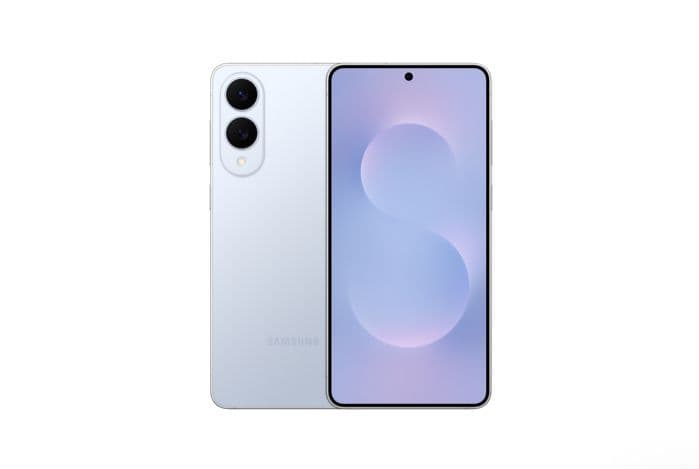
The Galaxy S25 Edge’s design makes a stronger impression in person than in pictures. You only truly appreciate how thin and sleek it is once you hold it. While it's not as small as compact flagships like the OnePlus 13S or other sub-6.3" devices, it feels light and comfortable, making it easy to hold for long periods. Weighing just 163g with a 5.8 mm thickness, it’s a truly palm-friendly phone.
The S25 Edge comes in three color options: Titanium Icy Blue, Titanium Silver, and Titanium Jet Black, all equally premium in appearance.
Now here’s the surprising part: despite being super slim, it’s incredibly durable. Yes, JerryRigEverything put it through a bend test, and guess what? The S25 Edge survived with flying colors. This proves that thin phones can be built strong. Credit goes to the titanium frame, Gorilla Glass Ceramic 2 front, and Gorilla Glass Victus 2 back. Plus, it’s IP68-rated, making it dust-tight and water-resistant. Well done, Samsung.
Display
When it comes to displays, Samsung always delivers, and the Galaxy S25 Edge is no exception. It features a 6.7-inch LTPO AMOLED 2X panel with a 120 Hz refresh rate, 480 Hz PWM dimming, HDR10+, and peak brightness of 1600 nits.
What do all these features mean for you?
- The 120Hz refresh rate gives you ultra-smooth scrolling and animations.
- The LTPO tech helps save battery by dynamically adjusting the refresh rate.
- The 480Hz PWM reduces eye strain, especially in low brightness.
- HDR10+ ensures vibrant colors and deep contrast, great for watching videos.
- And with 1600 nits brightness, visibility outdoors is top-tier.
That said, there’s one missing feature that disappointed me: it lacks the anti-reflective coating found on the Galaxy S25 Ultra. Samsung, if you’re listening, it’s time to make this standard across all flagship models.
Performance—Top Quality
At the core of the Galaxy S25 Edge is the Snapdragon 8 Elite chipset with an octa-core CPU (2x4.32 GHz Oryon V2 Phoenix L + 6x3.53 GHz Oryon V2 Phoenix M) and the Adreno 830 GPU. This chipset delivers blazing-fast speeds, efficient multitasking, and top-tier gaming performance.
This chip isn’t just about raw power; it’s also built for AI acceleration, energy efficiency, and heat management. Everything from gaming to content creation to AI photo editing runs smoothly.

The phone runs Android 15 with One UI 7 out of the box, with One UI 8 already in view. My experience with gaming was especially positive, smooth, fast, and immersive. The large screen definitely added to the fun.
Storage-wise, you can choose between 256GB and 512GB, both paired with 12GB of RAM. And honestly? That RAM configuration is just right. No lag, no stutters, just seamless performance.
Camera
Here’s where things get a bit complicated. The camera system on the Galaxy S25 Edge is solid but not perfect. It’s about 15% below the S25 Ultra, mainly because it lacks a telephoto lens.
Here’s the setup:
- 200 MP, f/1.7 (wide), OIS, multi-directional PDAF
- 12 MP, f/2.2 (ultrawide), 120° FOV, PDAF
- 12 MP front camera, f/2.2 with dual pixel PDAF
Video support includes:
- Rear: 8K @ 30fps, 4K @ 30/60/120fps, 1080p @ 30/60/120/240fps
- Front: 4K @ 30/60fps, 1080p @ 30/60fps
The main sensor takes stunning photos, especially in daylight. The ultrawide lens, however, is a bit soft, and there’s no optical zoom, which is a shame at this price point. So, if photography is your main focus, the S25 Ultra remains the better option.
Battery – The Only Real Compromise
If you’re looking for a flagship phone with long-lasting battery life, this might not be your best bet. The 3,900 mAh battery feels underwhelming by 2025 standards. It supports 25W wired charging (PD, QC2.0, 55% in 30 minutes) and 15W wireless charging (Qi2 Ready), but it still falls short.
Frankly, this is the only major letdown. I think if Samsung had used a next-gen silicon-carbon battery, it could’ve made a big difference. But as it stands, battery life is just average, and in a flagship, that’s hard to ignore.
Samsung Galaxy S25 Edge Price
The Samsung Galaxy S25 Edge is not a cheap smartphone. Its price starts at $1,099.99 for the base model with 12GB of RAM and 256GB of storage. The cost of the model with 12GB of RAM and 512GB of storage is $1,219.99.
Buy Samsung Galaxy S25 Edge
Samsung Galaxy S25 Edge Review: Final Thoughts
The buzz about its thinness is real, and it’s justified. Samsung did a remarkable job with the design, engineering, and durability. It’s sleek, strong, and gorgeous to hold.
However, for the price, I expected a complete camera setup and better battery life. In 2025, flagship phones shouldn’t be compromising on battery capacity; it’s a fundamental need. Samsung should know better.
That said, if you value design, premium build, display quality, and top-tier performance and can live with the battery trade-off, the Galaxy S25 Edge is a solid buy.