Galaxy Z Fold 7 vs Galaxy Z Fold 6
Phone Comparison

Samsung Galaxy Z Fold 7 vs Galaxy Z Fold 6: Which Is Better?

Deciding between the Samsung Galaxy Z Fold7 and Z Fold6? Explore a detailed comparison of their specs, performance, cameras, and features.

By firstayo10 months ago

Quick Answer

Deciding between the Samsung Galaxy Z Fold7 and Z Fold6? Explore a detailed comparison of their specs, performance, cameras, and features.

Advertisement

The world of foldable smartphones is rapidly evolving, and Samsung continues to lead the charge. With the highly anticipated release of the Samsung Galaxy Z Fold 7, many are wondering how it stacks up against its popular predecessor, the Samsung Galaxy Z Fold 6.

If you're a current Galaxy Z Fold 6 owner contemplating an upgrade, or a new buyer trying to decide which cutting-edge foldable is right for you in 2025, this comprehensive comparison is designed to help.

We'll dive deep into the key specifications, highlighting the advancements and differences to help you make an informed decision about these premium foldable devices.

See Also: Best Foldable Phones of 2025: Top Picks & Buyer's Guide

Samsung Galaxy Z Fold 7 vs Galaxy Z Fold 6

Both the Galaxy Z Fold7 and Galaxy Z Fold6 offer state-of-the-art 5G connectivity, supporting GSM, CDMA, HSPA, EVDO, and LTE networks. However, the Galaxy Z Fold7 brings several significant enhancements that set it apart.

Design and Build

Galaxy Z Fold 7
Silver color of Galaxy Z Fold 7

When it comes to the physical design, the Galaxy Z Fold 7 is notably slimmer and lighter. It measures 158.4 x 143.2 x 4.2 mm unfolded and 158.4 x 72.8 x 8.9 mm folded, weighing in at a mere 215 g (7.58 oz). This makes it significantly lighter than the Galaxy Z Fold6, which weighs 239 g (8.43 oz) and has folded dimensions of 153.5 x 68.1 x 12.1 mm.

Both devices boast an IP48 dust and water resistance rating, allowing immersion up to 1.5m for 30 minutes, and feature an advanced Armor aluminum frame for enhanced durability. The Z Fold 7 also features a Glass front (Gorilla Glass Victus Ceramic 2) when folded, and a plastic front when unfolded, with a Gorilla Glass Victus 2 back. The Z Fold 6 uses Gorilla Glass Victus 2 for both the front (folded) and back, with a plastic front when unfolded.

The Z Fold7 offers a more versatile SIM setup, supporting Nano-SIM + Nano-SIM + eSIM + eSIM (max 2 at a time) or Nano-SIM + Nano-SIM + multiple eSIM (max 2 at a time), while the Z Fold6 offers Nano-SIM + eSIM or eSIM + eSIM or Nano-SIM + Nano-SIM options.

See Also: Galaxy Watch Ultra 2025 vs Galaxy Watch8 vs Galaxy Watch8 Classic: Which Should You Buy?

Displays

The main foldable display on the Galaxy Z Fold7 is a larger 8.0-inch Foldable Dynamic LTPO AMOLED 2X panel, offering a resolution of 1968 x 2184 pixels (~368 ppi density). This provides a more expansive viewing area compared to the Galaxy Z Fold 6's 7.6-inch main display, which has a resolution of 1856 x 2160 pixels (~374 ppi density).

Both main displays feature 120Hz refresh rates and HDR10+. Crucially, the Z Fold 7's main display reaches a peak brightness of 2600 nits, matching the Z Fold 6's peak brightness. The Z Fold 7 also incorporates a Titanium plate layer for display support.

For the cover display, the Z Fold 7 sports a 6.5-inch Dynamic LTPO AMOLED 2X with 120Hz and Corning Gorilla Glass Ceramic 2, boasting a 1080 x 2520 pixel resolution (~422 ppi). The Z Fold 6's cover display is a 6.3-inch Dynamic LTPO AMOLED 2X with 120Hz, 2600 nits peak brightness, and Corning Gorilla Glass Victus 2, with a resolution of 968 x 2376 pixels (~410 ppi).

See Also: Samsung Galaxy Z Flip 7 vs Galaxy Z Flip 7 FE: Which Should You Buy?

Performance

Under the hood, the Samsung Galaxy Z Fold7 takes a significant leap forward. It's powered by the latest Qualcomm SM8750-AC Snapdragon 8 Elite (3 nm) chipset, featuring an Octa-core CPU with a powerful 2x4.47 GHz Oryon V2 Phoenix L and 6x3.53 GHz Oryon V2 Phoenix M cores, alongside an Adreno 830 (1200 MHz) GPU.

This promises superior processing power and graphics performance compared to the Galaxy Z Fold 6, which runs on the Qualcomm SM8650-AC Snapdragon 8 Gen 3 (4 nm) chipset with an 8-core CPU (1x3.39GHz Cortex-X4 & 3x3.1GHz Cortex-A720 & 2x2.9GHz Cortex-A720 & 2x2.2GHz Cortex-A520) and Adreno 750 (1 GHz) GPU.

The Z Fold7 also ships with Android 16 and up to 7 major Android upgrades, featuring One UI 8, while the Z Fold6 launched with Android 14 and One UI 6.1.1, also offering up to 7 major Android upgrades. Both devices offer internal storage options up to 1TB, with 12GB or 16GB RAM for the Z Fold7 and 12GB RAM for the Z Fold6, utilizing UFS 4.0 storage.

See Also: Apple iPhone vs Samsung Galaxy: Which is the Better Smartphone

Camera Systems

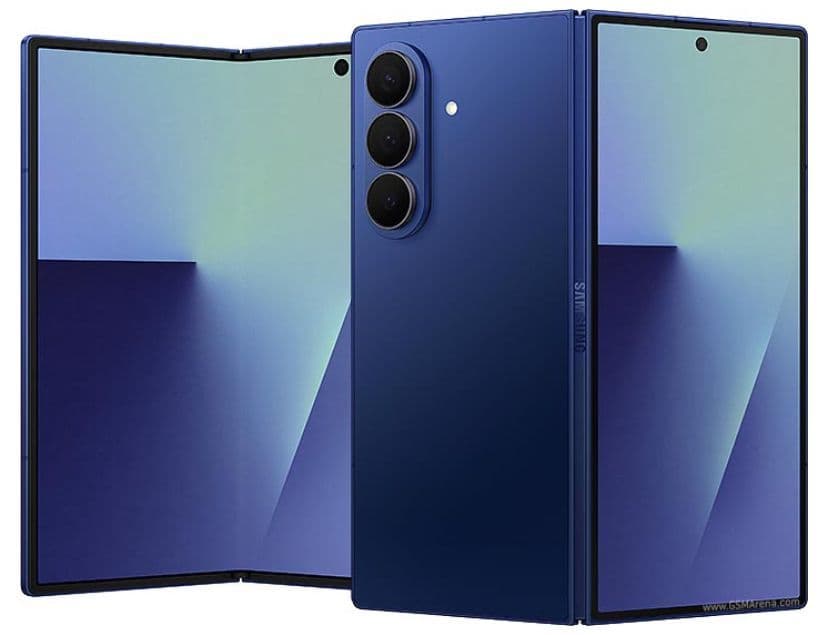
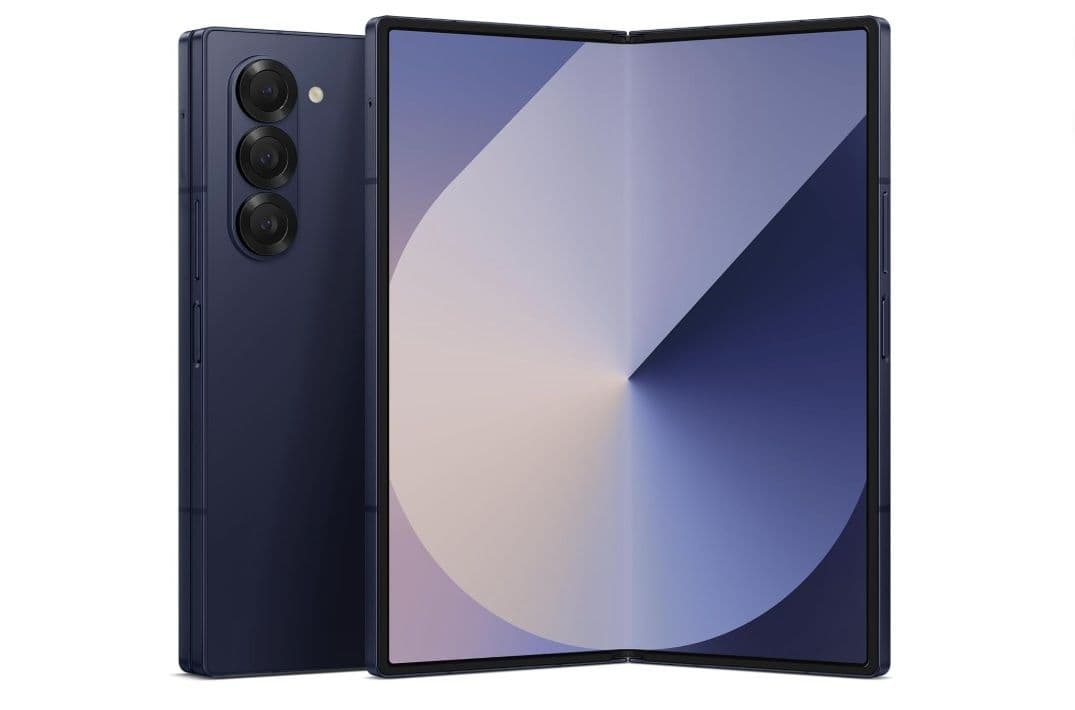
Camera bump of the Galaxy Z Fold 6

For photography enthusiasts, the Galaxy Z Fold7 brings substantial camera improvements. It features a triple main camera setup with a 200 MP wide sensor (f/1.7, 1/1.3"), a 10 MP telephoto lens with 3x optical zoom, and a 12 MP ultrawide lens. This is a significant bump from the Z Fold6's 50 MP wide sensor, 10 MP telephoto with 3x optical zoom, and 12 MP ultrawide.

Both phones offer excellent video recording capabilities, including 8K@30fps, 4K@60fps, and various slow-motion options with gyro-EIS, plus 10-bit HDR and HDR10+ video.

For selfies, the Z Fold7 has a 10 MP ultrawide front camera and a 10 MP wide cover camera. The Z Fold6 features a 4 MP under-display selfie camera and a 10 MP wide cover camera. Both support 4K@30/60fps video recording with gyro-EIS.

See Also: Google Pixel 9 vs Pixel 9 Pro vs Pixel 9 Pro XL: Which Should You Buy

Battery and Charging

Both the Samsung Galaxy Z Fold7 and Galaxy Z Fold6 come with a 4400 mAh Li-Po battery. Charging speeds are also identical, with both supporting 25W wired charging (reaching 50% in 30 min), 15W wireless charging, and 4.5W reverse wireless charging. So, in terms of battery capacity and charging, there's no direct upgrade from the Z Fold6 to the Z Fold7.

Audio, Connectivity, and Features

Both foldables feature stereo speakers tuned by AKG, but neither includes a 3.5mm headphone jack. Connectivity-wise, the Z Fold7 gets an upgrade to Wi-Fi 802.11 a/b/g/n/ac/6e/7 and Bluetooth 5.4, while the Z Fold6 has Wi-Fi 802.11 a/b/g/n/ac/6e and Bluetooth 5.3.

Both include comprehensive positioning systems (GPS, GALILEO, GLONASS, BDS, QZSS) and NFC. Key features like a side-mounted fingerprint sensor, accelerometer, gyro, proximity, compass, barometer, Samsung DeX support, and Ultra Wideband (UWB) support are present on both models. Both also feature Samsung's "Circle to Search" functionality.

Pricing

The price of the Samsung Galaxy Z Fold 7 starts at $1,999, while that of the Galaxy Z Fold 6 starts at around $1899. Currently, the Z Fold 6 is about $100 cheaper than the Z Fold 7.

Buy Samsung Galaxy Z Fold 7

You can now buy the Samsung Galaxy Z Fold 7 online using the details below:

Buy Galaxy Z Fold 6

Which is Better? Should a Galaxy Z Fold6 Owner Upgrade?

Based on the specifications, the Samsung Galaxy Z Fold7 is objectively better. It features a newer, more powerful Snapdragon 8 Elite chipset, a larger main display, a significantly upgraded 200 MP main camera, and a thinner, lighter design. These advancements make it the top choice for those seeking the absolute best foldable experience in 2025.

For a Galaxy Z Fold6 owner, the decision to upgrade depends on your priorities:

  • Upgrade if:
    • You crave the absolute best performance for demanding apps and gaming, driven by the Snapdragon 8 Elite.
    • Photography is crucial, and you want the significant leap to the 200 MP main camera sensor and improved video capabilities.
    • You desire a larger main display and a thinner, lighter design for improved portability and ergonomics.
    • You prioritize having the latest software (Android 16 out of the box) and the longest future software support.
  • Stick with the Z Fold6 if:
    • You're satisfied with its current performance, as the Snapdragon 8 Gen 3 is still incredibly capable.
    • Your camera needs are adequately met by its 50 MP main sensor and versatile setup.
    • Battery life and charging speed are sufficient for your daily use, as these remain largely unchanged.
    • Value is a primary concern. The significantly lower price of the Z Fold6 (especially on renewed or refurbished markets) makes it an excellent choice for a premium foldable experience without the Z Fold7's premium cost.
    • You already own a Z Fold6 and find its dimensions and weight acceptable.

Conclusion

The Samsung Galaxy Z Fold7 represents a meaningful evolution in the foldable smartphone landscape, bringing substantial upgrades in processing power, camera technology, and design refinement. It truly stands as Samsung's most advanced foldable to date.

However, the Galaxy Z Fold6 remains a highly capable device, offering a robust foldable experience at a much more attractive price point. For those demanding the very latest innovations and top-tier performance, the Galaxy Z Fold7 is the clear winner.

For existing Z Fold6 owners, consider your most critical needs: if the camera, raw processing power, or the slimmer design are compelling enough, the upgrade is justified. Otherwise, your Z Fold6 is likely to serve you well for another year or more, especially given its continuing software support and robust features. Choose the foldable that best aligns with your usage habits and budget to unlock the future of mobile technology!