OnePlus 13 vs iPhone 16: Which Phone Should You Buy?
Choosing between one of Android's best and Apple's latest? Our in-depth comparison of the OnePlus 13 and iPhone 16 will help you decide which to buy.
Quick Answer
Choosing between one of Android's best and Apple's latest? Our in-depth comparison of the OnePlus 13 and iPhone 16 will help you decide which to buy.
Advertisement
In the ever-evolving smartphone landscape, the OnePlus 13 and Apple iPhone 16 stand as formidable contenders, each offering a distinct blend of features and capabilities. Whether you're an Android loyalist or an iOS enthusiast, understanding their core differences is key to making the right choice.
This comprehensive comparison will break down their specifications, highlight their strengths, and guide you toward the smartphone that best fits your lifestyle and needs.
See Also: OnePlus 13 vs OnePlus 13R: Which OnePlus 13 is Right for You?
OnePlus 13 vs iPhone 16

Pricing and Colors
Price and available colors can also influence a purchase decision.
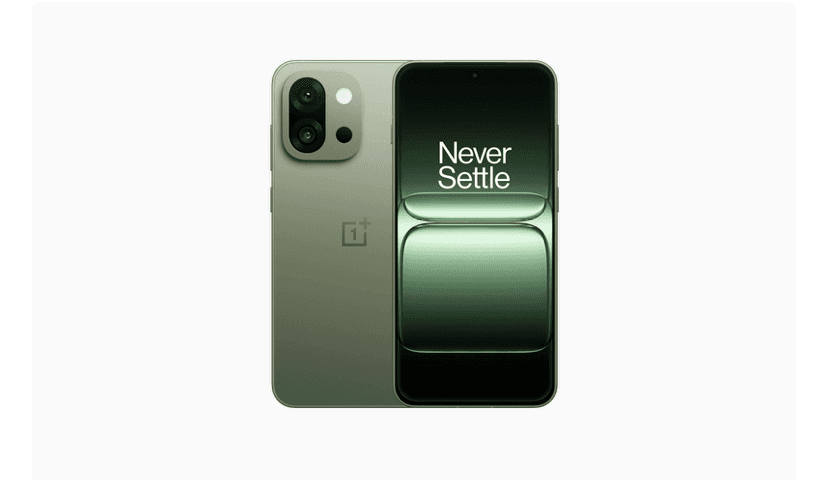
- The OnePlus 13 is available in Black Eclipse, Arctic Dawn, and Midnight Ocean. Its price starts at approximately $809.99 / £719.00 / €848.00.
- The iPhone 16 offers a wider range of colors: Black, White, Pink, Teal, and Ultramarine. Its price starts lower at around C$1,020.00 / $698.00 / £629.10 / €794.90.
Verdict on Pricing: The iPhone 16 is generally more affordable at its starting price point compared to the OnePlus 13.
Buy OnePlus 13
Buy Apple iPhone 16
Network Technology
Both devices offer robust network support. The OnePlus 13 supports GSM, HSPA, LTE, and 5G. The iPhone 16 offers broader compatibility, including GSM, CDMA, HSPA, EVDO, LTE, and 5G. For users on CDMA networks, the iPhone 16 offers wider support.
See Also: OnePlus 13 vs Samsung Galaxy S25: Which Should You Buy?
Design and Build

The feel and durability of a smartphone are crucial. Both devices feature premium builds.
- The OnePlus 13 measures 162.9 x 76.5 x 8.5 mm or 8.9 mm and weighs 210 g or 213 g. It boasts a glass front (Ceramic Guard), an aluminum frame, and options for a glass back or a silicone polymer (eco leather) back. It comes with an impressive IP68/IP69 dust and water resistance rating, protecting against high-pressure water jets and immersion up to 1.5m for 30 min.
- The iPhone 16 is more compact and lighter at 147.6 x 71.6 x 7.8 mm and 170 g. It features a glass front, glass back, and an aluminum frame. It has an IP68 dust and water resistance rating, allowing immersion up to 6m for 30 min.
Verdict on Design: The iPhone 16 is significantly more compact and lighter, making it more pocketable and easier for one-handed use.
While both offer excellent water resistance, the OnePlus 13's IP69 rating provides additional protection against high-pressure water jets. The iPhone 16 can be submerged deeper (6m vs 1.5m).
See Also: Apple iPhone 16e vs iPhone 16: Which iPhone is Right for You?
Display
Both phones offer stunning displays, but with differences in size, technology, and brightness.
- The OnePlus 13 features a large 6.82-inch LTPO 4.1 AMOLED display with a resolution of 1440 x 3168 pixels (~510 ppi). It supports 1 billion colors, 120Hz refresh rate, Dolby Vision, HDR10+, and HDR Vivid, with an advertised peak brightness of 4500 nits (measured at 1204 nits). Its screen is protected by Ceramic Guard glass, rated Mohs level 4.
- The iPhone 16 has a smaller 6.1-inch Super Retina XDR OLED display with a resolution of 1179 x 2556 pixels (~460 ppi). It supports HDR10 and Dolby Vision, with a typical brightness of 1000 nits and an HBM (High Brightness Mode) of 2000 nits (measured at 1708 nits). It features Ceramic Shield glass (2024 gen) for protection, also rated Mohs level 4.
Verdict on Display: The OnePlus 13 offers a larger screen with a higher resolution and pixel density, providing a more expansive and sharper visual experience.
However, the iPhone 16 boasts a significantly brighter measured display (1708 nits vs. 1204 nits), which is better for outdoor visibility.
See Also: Nothing Phone 3 vs iPhone 16: Which is Better?
Chipset and Software

These flagships are powered by their respective companies' latest chipsets.
- The OnePlus 13 runs on the Qualcomm SM8750-AB Snapdragon 8 Elite (3 nm) with an Octa-core CPU and Adreno 830 GPU. It ships with Android 15 and is promised up to 4 major Android upgrades.
- The iPhone 16 is powered by the Apple A18 (3 nm) chip with a Hexa-core CPU and Apple GPU (5-core graphics). It shipped with iOS 18, upgradable to iOS 18.5.
Performance Benchmarks:
- AnTuTu (v10): OnePlus 13: 2,690,491. iPhone 16: 1,721,149.
- GeekBench (v6): OnePlus 13: 9278. iPhone 16: 7929.
- 3DMark (Wild Life Extreme): OnePlus 13: 6615. iPhone 16: 4295.
Verdict on Performance: The OnePlus 13 demonstrates significantly higher benchmark scores across AnTuTu, GeekBench, and 3DMark, indicating a more powerful overall performance, especially in graphics-intensive tasks and general system speed.
See Also: Nothing Phone 3 vs Samsung Galaxy S25: Which is Better?
Memory and Storage
Neither phone supports expandable storage.
- The OnePlus 13 offers versatile internal storage options: 256GB with 12GB RAM, 512GB with 12GB RAM, 512GB with 16GB RAM, and a top-tier 1TB with 24GB RAM. All use UFS 4.0.
- The iPhone 16 comes with 128GB, 256GB, or 512GB of internal NVMe storage, all paired with 8GB RAM.
Verdict on Memory & Storage: The OnePlus 13 provides substantially more RAM (up to 24GB) and larger storage capacities (up to 1TB), making it superior for users who require vast amounts of space for media and applications, or engage in heavy multitasking.
Camera System
Camera capabilities are a key differentiator.
Main Camera:
- The OnePlus 13 features a triple 50 MP camera system with Hasselblad Color Calibration. This includes a 50 MP wide lens (f/1.6), a 50 MP periscope telephoto lens with 3x optical zoom, and a 50 MP ultrawide lens (120˚ FOV). It supports 8K@30fps video recording.
- The iPhone 16 has a dual-camera setup: a 48 MP wide lens (f/1.6) with dual pixel PDAF and sensor-shift OIS, and a 12 MP ultrawide lens (f/2.2, 120˚ FOV) with dual pixel PDAF. It supports 4K@24/25/30/60fps video, with Dolby Vision HDR.
Selfie Camera:
- The OnePlus 13 has a 32 MP wide selfie camera (f/2.4), capable of 4K@30/60fps video.
- The iPhone 16 features a 12 MP wide selfie camera (f/1.9) with PDAF and an SL 3D depth/biometrics sensor for Face ID. It supports 4K@24/25/30/60fps video.
Verdict on Camera: The OnePlus 13 offers a more versatile triple 50MP rear camera setup with a dedicated 3x optical periscope telephoto lens and Hasselblad tuning. It also boasts a higher resolution selfie camera.
The iPhone 16 provides a larger main sensor for potentially better low-light performance and dual pixel PDAF on both its main and ultrawide lenses for faster focusing.
See Also: vivo X Fold 5 vs Honor Magic V5: Which Is Better
Sound and Audio
Both phones feature stereo speakers and omit the 3.5mm headphone jack.
- The OnePlus 13 supports 24-bit/192kHz Hi-Res audio. Its loudspeaker was rated "Very good" with -23.5 LUFS.
- The iPhone 16's loudspeaker was also rated "Very good" with -25.5 LUFS.
Verdict on Sound: Both offer excellent stereo sound, with the OnePlus 13 specifically highlighting Hi-Res audio support.
Connectivity and Other Features
Both devices are well-equipped with modern connectivity.
- The OnePlus 13 supports Wi-Fi 802.11 a/b/g/n/ac/6/7 (dual or tri-band) and Bluetooth 5.4 with aptX HD and LHDC 5. It also includes an infrared port. It has an ultrasonic under-display fingerprint sensor.
- The iPhone 16 supports Wi-Fi 802.11 a/b/g/n/ac/6/7 (tri-band) and Bluetooth 5.3. It features Face ID for secure authentication. Its USB-C 2.0 port also supports DisplayPort. It includes Ultra Wideband (UWB) support (gen2 chip), Emergency SOS, Messages, and Find My via satellite.
Verdict on Connectivity & Features: The iPhone 16 offers unique features like Face ID, UWB, and satellite communication for emergencies. The OnePlus 13 provides an infrared port and a newer Bluetooth standard with advanced codecs.
Battery Life and Charging
Battery performance is a major consideration for users.
- The OnePlus 13 boasts a large 6000 mAh Si/C Li-Ion battery. It supports incredibly fast 100W wired charging (50% in 13 min, 100% in 36 min), 50W wireless charging, 10W reverse wireless, and 5W reverse wired charging. Its active use score was 15 hours and 28 minutes, with an EU label endurance of 61 hours and 36 minutes. The battery is rated for 1000 cycles.
- The iPhone 16 has a smaller Li-Ion 3561 mAh battery. It supports 25W wired charging (50% in 30 min), 25W MagSafe wireless, 15W Qi2 wireless, and 4.5W reverse wired charging. Its active use score was 15 hours and 42 minutes, with an EU label endurance of 37 hours. Its battery is also rated for 1000 cycles.
Verdict on Battery & Charging: The OnePlus 13 offers a significantly larger battery capacity and vastly faster wired and wireless charging speeds, along with more versatile reverse charging options.
While the iPhone 16 surprisingly achieves a slightly longer active use score despite a smaller battery, the OnePlus 13 provides much better overall endurance.
Durability and Repairability
Beyond IP ratings, EU label data provides insights into robustness.
- The OnePlus 13 has an EU label free-fall rating of Class D (45 falls) and a repairability rating of Class B. Its energy efficiency is Class A.
- The iPhone 16 has an EU label free-fall rating of Class C (90 falls) and a repairability rating of Class C. Its energy efficiency is Class B.
Verdict on Durability & Repairability: The iPhone 16 shows better free-fall durability with a Class C rating (90 falls) compared to the OnePlus 13's Class D (45 falls).
However, the OnePlus 13 has a better repairability rating (Class B vs. Class C) and better energy efficiency (Class A vs. Class B).
Which Should You Buy, OnePlus 13 or iPhone 16?
Choosing between the OnePlus 13 and iPhone 16 comes down to your priorities:
Choose the OnePlus 13 if:
- You prioritize raw performance and benchmark superiority for demanding apps and games.
- You need exceptionally fast charging (wired and wireless) and a larger battery for extended endurance.
- You want the most versatile camera system with 50MP across all lenses, 3x optical zoom, and Hasselblad tuning.
- You require maximum RAM and storage options (up to 24GB RAM, 1TB storage).
- You prefer a larger, higher-resolution display for immersive content consumption.
- Superior IP69 water resistance against high-pressure water jets is important.
Choose the Apple iPhone 16 if:
- You prefer a more compact and lighter design that's easier to handle.
- You are deeply embedded in the Apple ecosystem and prefer iOS.
- You want a brighter display for superior outdoor visibility.
- Face ID, Ultra Wideband (UWB), and satellite communication features are important to you.
- You prefer a device with better free-fall durability.
- You are looking for a slightly more affordable flagship smartphone.
In summary, the OnePlus 13 offers cutting-edge Android performance, unparalleled charging speeds, and a robust camera system, ideal for power users and Android enthusiasts.
The iPhone 16 provides a refined iOS experience in a more compact form factor, with a very bright display, unique Apple ecosystem features, and better drop protection, all at a competitive price point.
Your decision will hinge on whether you prioritize raw power and Android flexibility or the streamlined, integrated experience of iOS.
Launch and Availability
The Apple iPhone 16 made its debut earlier, announced on September 9, 2024, and released on September 20, 2024. The OnePlus 13 followed a bit later, announced on October 31, 2024, and became available on November 1, 2024.